
Most Accessible National Parks for People with Disabilities
Whenever possible, it’s important to make outdoor spaces like national parks accessible for people with disabilities. Accessible parks enhance the experiences of disabled individuals, including wheelchair users, hearing or vision-impaired people, people with cognitive disabilities, and more.
In the U.S., the National Park Service works to ensure its facilities are as accessible as possible for visitors with disabilities, and each park has its own website with detailed information on planning an accessible park trip.
Top 10 Accessible National Parks for People with Disabilities
Not all national parks in the U.S. are accessible for disabled individuals, especially those who require mobility devices like wheelchairs or walkers. Some parks are more accessible than others, with many featuring wheelchair-friendly trails, sensory experiences, and accessible accommodations.
People with permanent disabilities may be eligible for an America the Beautiful Access Pass, which gives them free lifetime access to all National Park Service recreation sites. The pass also provides discounts on expanded amenity fees for camping, swimming, boat launching, and guided tours at many sites.
To be approved for an Access Pass, you must have a permanent physical, mental, or sensory impairment that severely limits one or more major life activities.
Yellowstone National Park
Yellowstone National Park spreads throughout Idaho, Montana, and Wyoming. While many of the park’s facilities are historic and not fully accessible, the park is working to remove barriers to accessibility. However, due to Yellowstone’s remote wilderness setting, some challenges remain.
Yellowstone’s backcountry and recommended wilderness areas are open to all, and wheelchairs are allowed. The park features numerous accessible campsites and trails, including the Goose Lake Campsite, Ice Lake Campsite, Long Star Geyser Trail, and Natural Bridge Trail.
Grand Teton National Park
Grand Teton is a national park in Wyoming with numerous accessible trails, lodging facilities, campgrounds, and more. People with disabilities are permitted to use any type of assistive technology to access the park.
The visitor centers and information stations provide accessible restrooms, and all lodging facilities provide some accessible units except the American Alpine Club Climber’s Ranch. A few trails are accessible with asphalt surfaces, including Colter Bay headwall, Jackson Lake Dam overview, Menors Ferry Historic District, and the Jenny Lake shore trail.
Yosemite National Park
Yosemite National Park in California is full of trees, waterfalls, and large granite formations. The park offers a free, fully accessible shuttle bus service in Yosemite Valley to all park visitors, and an accessibility guide is available at all entrances, visitor centers, and online.
People with disabilities can use wheelchairs or other power-driven mobility devices in the park, but these devices are prohibited in undeveloped designated wilderness areas. One particularly accessible trail is the Lower Yosemite Falls Trail.
Acadia National Park
Acadia National Park in Maine has various accessible paths, beaches, and more. In 2021, the park conducted a comprehensive accessibility assessment and is now making changes in building and operating the park to make it more accessible.
The park offers free Island Explorer bus rides for wheelchair users that stop at destinations throughout the park, including campgrounds, trailheads, and more. Service animals are allowed in all park facilities and on all park trails, and individuals with mobility challenges can request a special use permit to utilize powered mobility devices in the park.
Mammoth Cave National Park
Mammoth Cave National Park in Kentucky offers several accessibility features, including cave tours, campgrounds, trails, and other physical mobility features, as well as features for blind, deaf, and cognitively impaired individuals.
The park offers an accessible tour created for visitors with mobility devices, and there are no stairs on the tour, and some benches along the way. Additionally, the Heritage Trail, Echo River Spring Trail, Sand Cave Trail, and Sloan’s Crossing Pond Trail are all wheelchair accessible. Mammoth Cave Campground sites 37 and 38 are also fully accessible with paved access to accessible restrooms.
Great Sand Dunes National Park
Great Sand Dunes is a national park and preserve in Colorado that offers a unique accessible experience for mobility-challenged visitors: free specialized balloon-tire wheelchairs to access the dunes. There is an accessible mat from the dunes parking area to the edge of the Medano Creek and the sand, but beyond the edge of the dunes, sand and water make access difficult for traditional thin-wheeled chairs.
Sleeping Bear Dunes National Lakeshore
Sleeping Bear Dunes is a national lakeshore in Michigan that offers unique specialized wheelchairs to help visitors with mobility issues navigate the park’s sandy beaches. These sand wheelchairs are available at the Maritime Museum boathouse and the Cannery.
While Sleeping Bear Dunes aims to be as universally accessible as possible, many areas in the Lakeshore and wilderness are designated as primitive areas. Therefore, they may have extra obstacles. The D.H. Day Campground has one accessible campsite on packed soil with an accessible vault toilet.
Devils Tower National Monument
Devils Tower is a national monument and park in Wyoming that completed major accessibility improvements in 2021. These improvements heightened the accessibility of trails, exhibits, parking areas, and restrooms. The visitor center has accessible doorways and exhibits for wheelchair users and visually impaired people, and the amphitheater and picnic areas are also accessible.
While the 1.8-mile Tower Trail around the base of Devils Tower is paved, only the first 0.2 miles are considered wheelchair accessible due to elevation changes and unsteady terrain. Four sites in the Devils Tower campground are also regarded as accessible.
Mount Rainier National Park
Mount Rainier in Washington state has various facilities that are over a century old–because of this, accessibility at the park isn’t always ideal for wheelchair users.
While Mount Rainier continues working on eliminating barriers to accessibility, the park still has several accessible campsites and paved trails. The park brochure can be downloaded in various formats, including audio description and braille.
Grand Canyon National Park
The Grand Canyon in Arizona has historic facilities built before the introduction of current accessibility standards. The terrain is often rugged with narrow, rocky trails and steep cliffs, so visitors using wheelchairs or with visual impairments may find them inaccessible. Additionally, most motorized scooters will not fit on the shuttle buses, and regular wheelchairs must be 30”x 48” or smaller to fit.
However, the Grand Canyon offers a unique Scenic Drive Accessibility Permit that gives visitors with mobility issues access to some areas of the park that are closed to public traffic. The permit is available at entrance gates and visitor centers.
How to Plan an Accessible Visit to a National Park
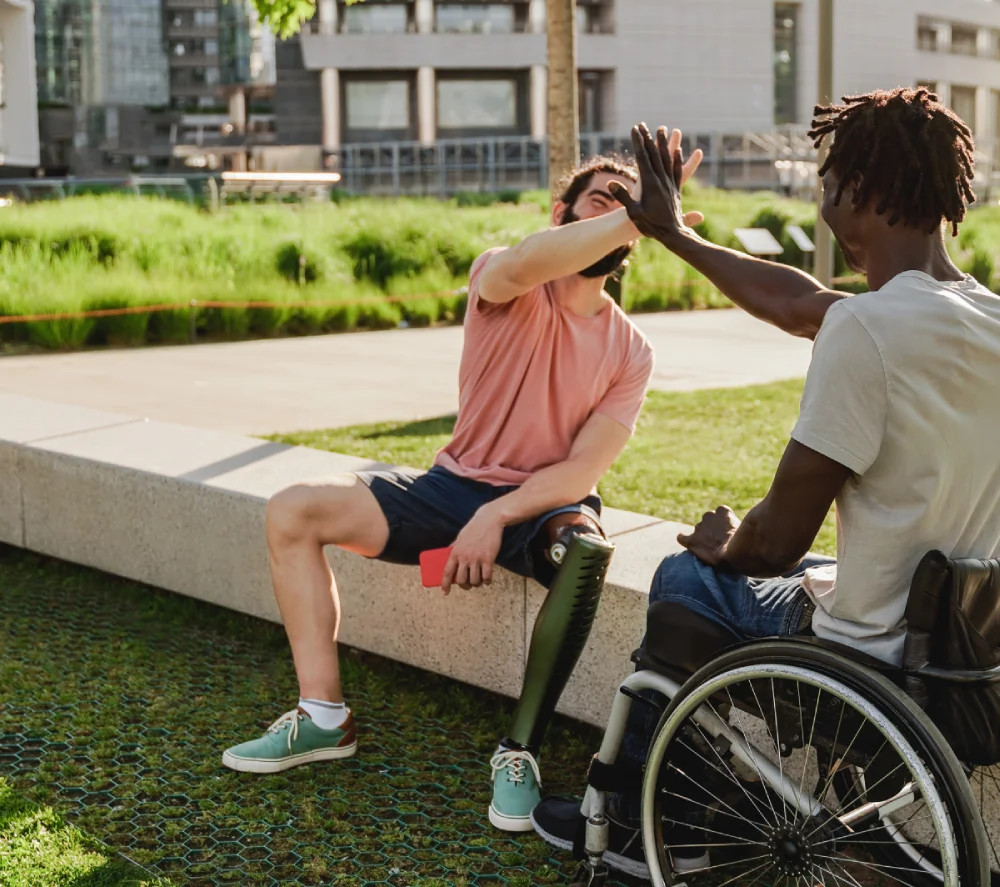
When planning a trip to a national park as a disabled person or the loved one of a person with accessibility needs, it’s important to do your research and figure out what accommodations, transportation, and facilities will be accessible. Each national park has an accessibility section on its website, and many also offer accessibility-focused brochures to guide visitors through the park.
Steps to Ensure Accessibility
Aside from checking the park’s accessibility resources, you may be able to contact park rangers to plan for specific needs. Some parks offer interpreters or guides for disabled visitors if given enough advance notice. Additionally, the official National Park Service app offers current accessibility details for facilities and select trails, as well as audio descriptions for outdoor exhibits and visitor center entrances and alt text for images.
Using Adaptive Equipment in National Parks
While some national parks offer rental wheelchairs or other mobility equipment, you must bring your own to some parks. It’s important to determine what mobility equipment you’ll need and how to get it before arriving at a park. Some parks, such as Sleeping Bear Dunes and Great Sand Dunes, offer park-specific wheelchairs built for the terrain—use these resources when you can.
Planning Accessible Hiking Trails
Most national parks have information on the difficulty and accessibility level of each trail in their maps or visitor guides. If you can’t find detailed information about trail accessibility ahead of time, you can always ask a park ranger at the park for recommendations when you arrive.
Frequently Asked Questions about Accessible National Parks
Are There Adaptive Programs for People with Disabilities in National Parks?
The National Park Service provides services at many national parks, including those listed above, such as sign language interpreters, captioning, assistive listening, audio description, large print, braille, service animals, and mobility devices.
How Do I Find Accessible Restrooms in National Parks?
Most national parks have maps of their facilities, such as restrooms at the visitor center or entrance. These maps are also typically available online on each park’s website.
What Activities Are Available for People with Disabilities in National Parks?
Many of the activities at national parks are accessible to people with disabilities. Some hiking trails and campgrounds are created with accessibility in mind, and some parks offer special wheelchairs to access beaches and wilderness areas. The activities available differ based on which park you plan to visit.
Make Your Visit to National Parks More Accessible Today
While some parks and outdoor spaces in the U.S. are not built to accommodate wheelchair users and other individuals with disabilities, many national parks have made great strides in accessibility in recent years. Accessible parks are crucial for communities so that disabled individuals can participate in the same outdoor activities as others.
Before heading to any national park, plan ahead by checking the accessibility information online, and contact Disability Advice if you have any questions about your rights as a disabled person.
